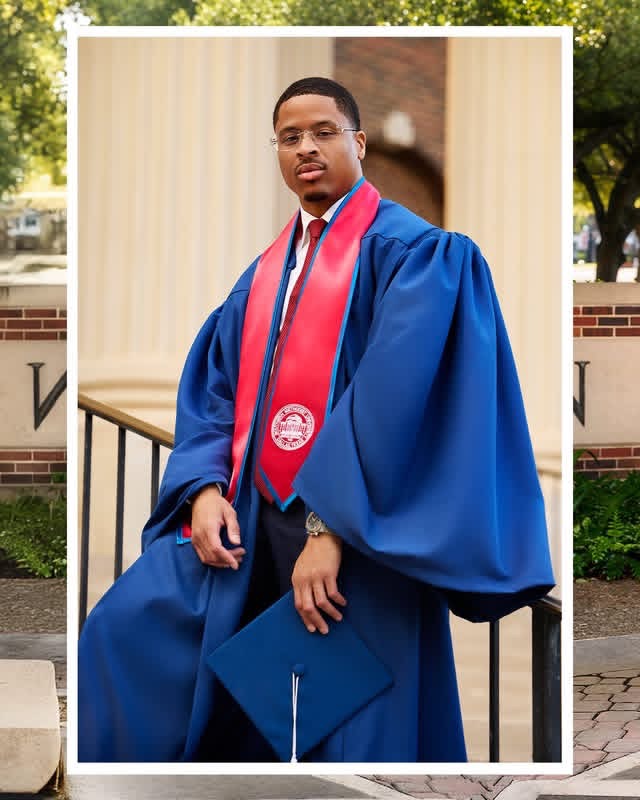
Chris Young was sentenced to two mandatory life sentences in federal prison for a nonviolent drug conspiracy. His judge wanted to give him less. The law wouldn’t let him. Ten years later, a former judge, a Dallas attorney, and Kim Kardashian walked into the White House on his behalf. Today, Chris is an author, a speaker, and a two-degree graduate of Southern Methodist University. This is his story.
A Childhood Shaped by Poverty
As a child growing up in a small town outside Nashville, Tennessee, Chris Young experienced extreme poverty. For nearly two years, his family lived without electricity or running water. When there was enough food on the table, it was because Chris’s “big brother Robert hustled up on us a meal.”
Chris never met his biological father and had never even seen a photograph of him. His mother struggled with an addiction to cocaine, making it impossible for her to care for Chris and his older brother. At the age of ten, Chris and his thirteen-year-old brother were adopted by a neighborhood matriarch they affectionately called “Big Mama.” Although she loved the boys deeply, she struggled to provide for the eight kids in her home. Food and water were often limited, and items many children take for granted—new clothes, shoes, and even haircuts—were luxuries she could not afford.
“We had to go to school with holes in our shoes—big enough for my big toe and two other toes to stick out,” Chris recalled.
That same year, Chris witnessed his cousin being murdered. Coupled with the trauma of being separated from his mother and growing up in extreme poverty, the experience placed an unimaginable emotional burden on a ten-year-old child.
Looking back, Chris says those early experiences shaped nearly every aspect of his childhood. The constant stress of poverty, instability, and separation from his mother weighed heavily on him. He also recognized the tremendous burden carried by his older brother, who felt responsible for protecting Chris and making sure he always had something to eat.
“He was still a child—only eleven, twelve, and thirteen years old during those years.”
Two Brothers, One Way Out
As the brothers struggled to survive, they eventually came to believe that one of their only paths out of poverty was selling drugs.
“I sold my first drugs when I was eleven. At first, it was only marijuana, but by the time I was fifteen, I was selling crack cocaine. Soon, I was at it twenty-five hours a day, eight days a week.”
Before long, law enforcement raided their home.
“All the drugs they found belonged to me, but my brother made a life-changing decision and claimed they were his.”
Chris watched as his older brother was taken to the county jail, sacrificing his own freedom to protect his younger sibling.
Reflecting on that experience, Chris remembers feeling that no one looked beyond the crime itself.
“They didn’t care that we came from poverty. They didn’t care that we were just children trying to survive. They only cared that we had broken the law.”
Chris’s brother spent the next eighteen months incarcerated. Tragically, just six months after his release, he died by suicide at only twenty-one years old.
Two Life Sentences—and a Judge With No Choice
For Chris, the consequences were equally devastating. He was later arrested by the FBI and DEA and charged in a federal drug conspiracy case. After his conviction, he received two mandatory life sentences, leaving his presiding judge, Kevin H. Sharp, with no discretion to impose a lesser punishment.
The prosecutor’s decision to file a Section 851 sentencing enhancement meant the court was required to impose the harshest sentence allowed under federal law. Neither Chris’s attorneys nor Judge Sharp had the authority to reduce it, despite Judge Sharp’s strong desire to do so after witnessing Chris’s whole case.
Preparing for his sentencing, Chris refused to let his life be defined by a single mistake.
“I knew I had to do something. While I was in the county jail, I spent my time reading, writing, and taking notes. When it came time for my sentencing, I wanted the court to know I wasn’t just a piece of trash to be thrown away. I wanted everyone in that courtroom to see that I was a human being.”
He hoped the court would understand that his childhood had been shaped by circumstances no child should ever have to endure.
“I had faced some of the hardest situations a child, teenager, or young adult should ever have to face alone. If it hadn’t been for the poverty—if I had opportunities—I would have made different choices. I wouldn’t have become a drug dealer.”
Despite his heartfelt statement, Chris was sentenced to two life sentences plus five years.
The Judge Who Resigned
Chris began serving what he believed would be the rest of his life in federal prison. At first, he devoted his energy to finding any possible way to challenge his sentence. Although he didn’t realize it at the time, his case had already drawn the attention of people who believed his punishment did not fit his crime.
Among them was Judge Sharp, a federal judge for the Middle District of Tennessee who presided over Chris’s case. After he heard the details of Chris’s case and saw the impact of mandatory minimum sentencing laws firsthand, Judge Sharp resigned from the federal bench and dedicated himself to advocating for criminal justice reform, particularly for people serving excessive sentences for nonviolent drug offenses.
News of Judge Sharp’s resignation attracted national media attention, bringing Chris’s story to the forefront. It eventually reached the attention of journalist Taylor Dolven and Dallas attorney Brittany K. Barnett, who had built a reputation for representing individuals serving disproportionately harsh federal drug sentences.
Barnett agreed to represent Chris pro bono, becoming one of the first people willing to fight for his release. Her belief in his case gave Chris renewed hope after years of believing he would never leave prison.
From the White House to Clemency
Recognizing the significance of Chris’s story, Barnett shared it with a friend who also became deeply invested in criminal justice reform—Kim Kardashian.
“Kevin H. Sharp, Brittany Barnett, and Kim Kardashian all met at the White House to advocate for my clemency,” Chris recalled.
Although those early efforts did not immediately result in his release, Barnett refused to give up. She continued pursuing every available legal avenue, eventually filing a post-conviction habeas corpus petition—a form of relief that is granted in only a small percentage of cases.
Her persistence paid off. Chris’s sentence was reduced from life imprisonment to fourteen years.
By that point, he had already served approximately ten years in federal prison. Although the sentence reduction meant his release was finally within reach, Barnett believed there was still more that could be done.
“I still had about two years left to serve. Brittany didn’t want to stop. She kept pushing.”
Together, Barnett and Kardashian continued advocating for Chris’s release, eventually bringing his case to the attention of President Donald Trump.
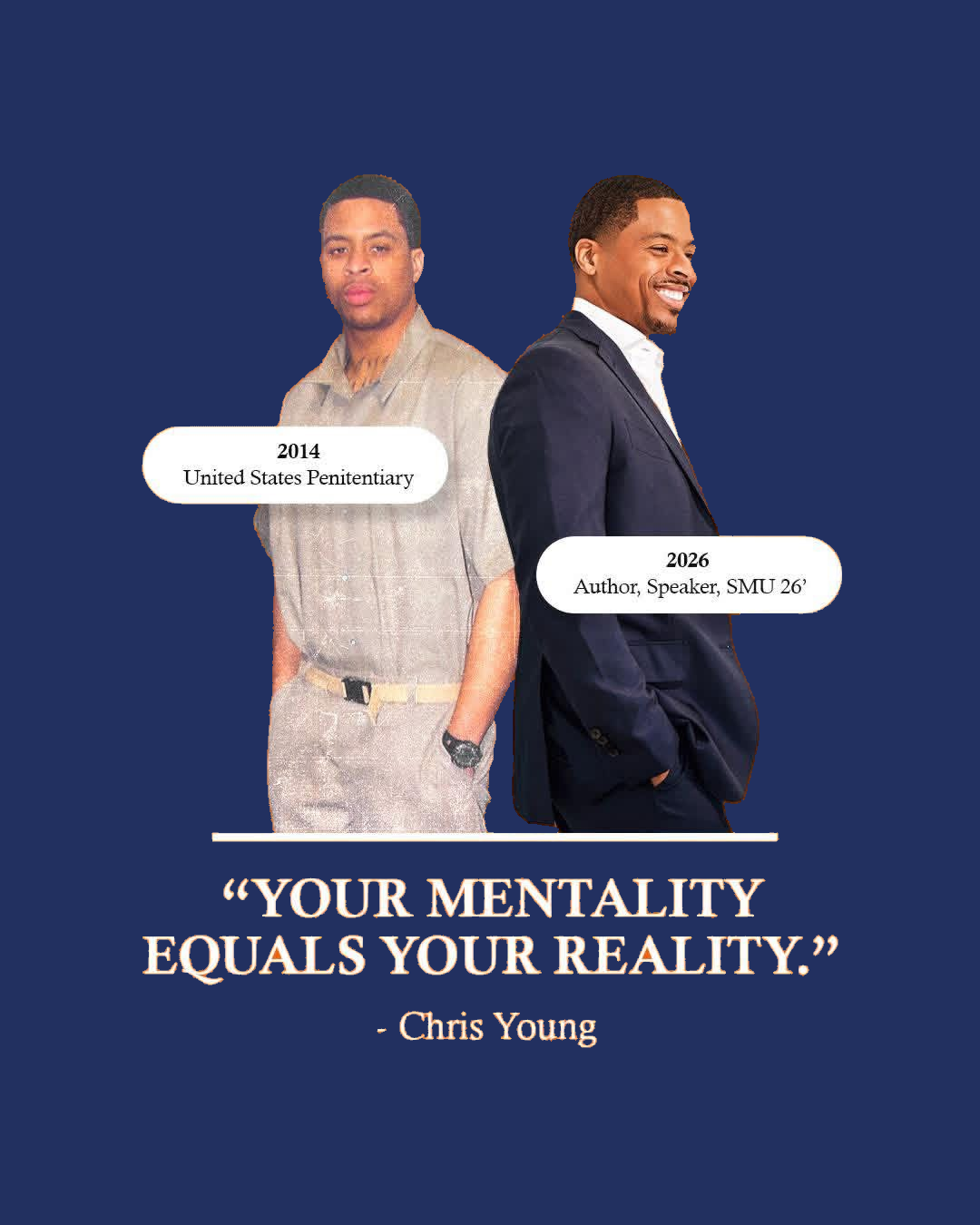
On January 20, 2021, President Trump granted Chris executive clemency, bringing an end to a sentence that had once seemed impossible to escape. After years behind bars, Chris finally walked out of prison a free man.
More Than the Worst Thing We’ve Ever Done
Chris’s release marked the end of one chapter, but it also became the beginning of a new purpose.
His experience illustrates how poverty, childhood trauma, and mandatory sentencing laws can permanently alter the course of a person’s life. Growing up without basic necessities, separated from his mother, and exposed to violence at an early age, Chris faced challenges that few children should ever have to endure. Those experiences shaped many of the decisions he made as a teenager, but they did not define the man he would ultimately become.
The consequences of Chris’s conviction reached far beyond his prison sentence. His family suffered emotionally, financially, and personally. His older brother, who had spent much of his childhood trying to protect Chris, carried an overwhelming burden that ultimately ended in tragedy.
Looking back, Chris often reflects on the words he shared during his sentencing hearing.
“If it hadn’t been for poverty—if I had opportunities—I would have made different choices.”
It was never an attempt to avoid responsibility. Instead, it was a plea for the court to recognize that children growing up in extreme poverty often face circumstances most people can scarcely imagine. Chris wanted the judge to understand that behind every case file is a human being whose life has been shaped by experiences, trauma, and circumstances long before entering a courtroom.
Today, Chris encourages others to look beyond a person’s worst mistake.
“We cannot allow people to be defined by the worst thing they’ve ever done. One mistake shouldn’t determine the rest of someone’s life.”
His message echoes the philosophy championed by civil rights attorney Bryan Stevenson, founder of the Equal Justice Initiative: “Each of us is more than the worst thing we’ve ever done.”
For Chris, those words represent the foundation of meaningful criminal justice reform—recognizing accountability while also believing in redemption.
Fixing the Root Causes
He also believes meaningful reform must address the root causes that often lead people into the criminal justice system. Poverty, limited educational opportunities, unstable homes, and untreated trauma all contribute to cycles that are difficult to escape. Rather than investing primarily in incarceration, Chris advocates for investing in education, economic opportunity, mental health resources, and community support—investments that give young people real alternatives before they ever enter the justice system.
“Education changes everything,” Chris explains. “When young people believe they have opportunities, they’re far less likely to believe crime is their only way out.”
Author, Speaker, SMU Graduate
Since returning home, Chris has dedicated himself to sharing his story in hopes of inspiring change. Through speaking engagements, advocacy, and his writing, he encourages lawmakers, justice professionals, and communities to rethink how America responds to crime and punishment.
He is currently preparing to release his memoir, a deeply personal account of the hardships he endured, the mistakes he made, and the hope he discovered along the way. More than a story about incarceration, Chris hopes the book will remind readers that transformation is possible—and that every person deserves the opportunity to rebuild a meaningful life.
Chris also recently graduated from Southern Methodist University with two degrees—public policy and economics—that will help further his advocacy and that stand as proof of his commitment to demonstrating the power of change.
Today, Chris’s life stands as a testament to resilience, redemption, and the power of second chances. His journey serves as a reminder that justice is not measured solely by punishment, but by our willingness to recognize human potential, extend compassion, and create opportunities for people to rebuild their lives.
Why This Matters for JRF
Chris Young’s story is exactly why the Justice Reform Foundation exists. Mandatory minimums and sentencing enhancements strip judges of the ability to see the person in front of them—and they fall hardest on people who grew up with the least. A judge who wanted to show mercy couldn’t. It took a resignation, a pro bono attorney, a celebrity, and a presidential signature to correct a sentence that should never have been imposed.
Through our Criminal Defense Clinic at Texas A&M School of Law, we give indigent defendants the representation that can change an outcome before it becomes a life sentence. Through our Expungement Program, we help Texans clear qualifying records so one chapter doesn’t dictate the rest of the book. And through our advocacy across Texas and at the federal level, we push for sentencing laws that leave room for the redemption Chris has proven is possible.
Share Your Story or Support the Work
Every voice we feature in the Stories of Injustice series is a person the system failed — and a reminder of the work still ahead.
Source: Interview with Chris Young, 2026. Photos: courtesy of Chris Young.



.png)